 Japan Reviewed
Here is the short answer. Of the 23 books that have won the Japan Booksellers' Award, seven exist in English. If you read one, read Lonely Castle in the Mirror — the highest-scored winner in the prize's history.
And here is the twist that made this article worth writing. Some of the Japanese novels best known in English — Convenience Store Woman, Before the Coffee Gets Cold, The Devotion of Suspect X, 1Q84 — never won anything. They placed low in their years and reached English anyway. The booksellers' ranking and the order in which books get translated move independently of each other.
The seven in English

Start here — the highest score in 23 years
Lonely Castle in the Mirror
651 points — the highest total any winner has ever received, which means the booksellers' votes split the least that year.

Read through a great translator's lens
The Great Passage
A 510-point winner from 2012. Carpenter sits at the centre of Japanese literature in English, so this is a good doorway into following one translator's work.

From a major English-language literary house
Confessions
A 411-point winner. Snyder translated three of the seven books on this page, so nearly half of what you can read passed through one reader of Japanese.
The first winner, and the first translated
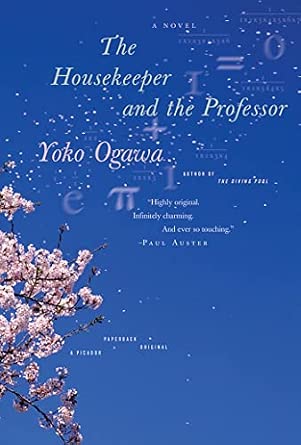
The Housekeeper and the Professor
202 points, the very first winner — and the earliest English edition of the seven. Read here to start where the prize started.

The only one in two volumes
The Deer King, Vol.1: Survivors
A 383-point winner. The English edition runs to two volumes — Survivors, then Returners — the only one of the seven that does not finish in one book.

The one you will never find by its title
Remote Control
A 509.5-point winner whose English title is not a translation of the Japanese one. Searching a translated title will never lead you here.

Five years a winner, newly in English
The Woman, the Boy, and the Whale
A 365.5-point winner whose English edition arrived in 2026, five years after the prize. Check the title twice — it has circulated under two English names.
Everything below comes from the award's official year-by-year pages for 2004 through 2026, plus a separate check of each English edition. The order below is by score and publication record, never a ranking of the works themselves — nothing here was judged by reading all 23 books against each other.
A translated title is a shaky thing to search by. Remote Control is not a translation of its original title at all, the 2021 winner has two English titles in circulation, and The Deer King splits into subtitled volumes that do not map onto the original's two books. Searching a translated title works about half the time for this prize.
Who picks this prize
The Booksellers' Award is voted in two rounds, on points, by the people who sell books in Japan — not critics, not authors. In 2026 the first round drew 490 stores and 698 voters, narrowing to 470 voters across 345 stores for the final count of the top ten.
One caution. The vote has grown every year, so a 2004 total cannot sit on the same scale as a 2024 one. Read every score below as a comparison within its year.
Books that reached English before the winners did
At least six times in 23 years, the winner stayed untranslated while something placed below it became the English-language hit. The English Wikipedia table carries only each year's ranks and scores, so this contrast never appears there.
2017 — the two best-known books placed ninth and tenth


The winner was Riku Onda's Honeybees and Distant Thunder at 378.5 points. No English translation found.
Ninth place went to Sayaka Murata's Convenience Store Woman at 70.5 points — published as Convenience Store Woman (Ginny Tapley Takemori translation, Grove Press, 2018) and shortlisted for the Best Translated Book Award. Tenth and last went to Toshikazu Kawaguchi's Before the Coffee Gets Cold at 68.5 points — published as Before the Coffee Gets Cold (Geoffrey Trousselot translation, Picador, 2019) and now a continuing series.
The two best-known books of that year's ten in the English-speaking world placed bottom two with Japan's booksellers. A 378.5-to-70.5 gap is not a near miss. Two markets looking at different things.
2010 — tenth place was 1Q84

The winner was Tow Ubukata's The Universe of Tenchi Seimei at 384.5 points. No English translation found.
Tenth place, at 91.5 points, was Haruki Murakami's 1Q84 — published as 1Q84 (Jay Rubin and Philip Gabriel translation, Knopf, 2011) and a worldwide event.
The most famous living Japanese novelist's signature work sat at the very bottom of the booksellers' top ten. That is not booksellers slighting Murakami — it is what the prize is for: books they want to hand-sell, books not everybody already knows. Both rankings are honest. Either one alone misleads.
2016 — second place became I Want to Eat Your Pancreas

The winner was Natsu Miyashita's Sheep and Steel Forest at 372 points. No English translation found.
Second place, Yoru Sumino's I Want to Eat Your Pancreas at 327.5, became I Want to Eat Your Pancreas (Idumi Kirihara translation, Seven Seas, 2018), with manga and audiobook editions alongside the light novel.
Close on points — 372 against 327.5 — and still only the runner-up crossed over.
2006 — fourth place started a series in English

The winner was Lily Franky's Tokyo Tower at 279 points, translated into Chinese and Thai but with no English edition found.
Fourth place, Keigo Higashino's The Devotion of Suspect X at 184.5, became The Devotion of Suspect X (Alexander O. Smith translation, Minotaur Books, 2011) — the opening of the Detective Galileo series in English.
For "read one and have somewhere to go next," this year's fourth place beats its winner. The straightforward entry into Japanese mystery in English starts here.
2019 — fifth place became A Man

The winner was Maiko Seo's And the Baton Was Passed at 435 points, one of the highest totals in prize history. No English translation found.
Fifth place, Keiichiro Hirano's A Man at 242.5, became A Man (Eli K. P. William translation, Amazon Crossing, 2020).
2021 — the runner-up beat the winner to English by three years

This is the one year where the winner did cross over — five years later. Sonoko Machida's 52-Hertz Whales at 365.5 points reached English in 2026.
But second place, Michiko Aoyama's What You Are Looking for Is in the Library at 287.5, became What You Are Looking for Is in the Library (Alison Watts translation, Hanover Square Press, 2023) — an English hit two years after the prize, three years ahead of the book that beat it.
The order in which translation rights move has almost nothing to do with the booksellers' order. One pair of books from one year shows it plainly.
The sixteen with no English edition found
The other sixteen winners turned up no English edition when each title, author and publisher was searched individually. That does not mean no translation is planned — unannounced deals are invisible — only that nothing could be confirmed as of September 2026.
| Year | Original title | Author | Points |
|---|---|---|---|
| 2005 | Night Picnic | Riku Onda | 374 |
| 2006 | Tokyo Tower | Lily Franky | 279 |
| 2007 | Run with the Wind for a Moment | Takako Sato | 475.5 |
| 2010 | The Universe of Tenchi Seimei | Tow Ubukata | 384.5 |
| 2011 | The Dinner Table Detective | Atsuya Higashikawa | 386.5 |
| 2013 | The Man Called Pirate | Hyakuta Naoki | 278.0 |
| 2014 | The Daughter of the Murakami Pirates | Ryu Wada | 366.5 |
| 2016 | Sheep and Steel Forest | Natsu Miyashita | 372 |
| 2017 | Honeybees and Distant Thunder | Riku Onda | 378.5 |
| 2019 | And the Baton Was Passed | Maiko Seo | 435 |
| 2020 | The Wandering Moon | Yu Nagira | 432 |
| 2022 | The Girl Who Shot the Enemy | Toma Aisaka | 463.5 |
| 2023 | Thou, Like the Stars | Yu Nagira | 443.5 |
| 2024 | Naruse Conquers the World | Mina Miyajima | 525.5 |
| 2025 | Cafune | Akiko Abe | 581.5 |
| 2026 | In the Megachurch | Ryo Asai | 452 |
Two things stand out. The second- and third-highest scores in prize history — 581.5 for 2025's Cafune and 525.5 for 2024's Naruse Conquers the World — sit on this side. The two books Japan's booksellers pushed hardest in recent years cannot be read in English yet; Naruse already has a Portuguese edition, so this looks less like a language wall than a question of where English-language publishers are looking.
And the newest winner, Ryo Asai's 2026 In the Megachurch, has no English edition either — Asai previously placed fourth in 2022 with The Real Thing, also untranslated. Fame in Japan and availability in English barely correlate.
So the practical next step, if the book you came for sits in this table: look at the rest of its year's top ten. As the six cases above show, a year whose winner never crossed over often sent its runner-up or its tenth place instead. Searching by year hits far more often than searching by title.
Where to start
- From the booksellers' strongest consensus → Lonely Castle in the Mirror. 651 points is the highest in 23 years
- From a book with somewhere to go next → The Devotion of Suspect X. Fourth place, not first — and the start of a continuing series in English
- From one translator's shelf → the three Stephen Snyder translations: The Housekeeper and the Professor, Remote Control, Confessions
- From the prize's beginning, in order → the seven in English re-sorted by year: 2004, 2008, 2009, 2012, 2015, 2018, 2021
- From the books English made famous first → books that reached English before the winners did. Convenience Store Woman and Before the Coffee Gets Cold live there
Twenty-three years of first places leaves a blunt fact — the booksellers' ranking barely works as a list of books to read in English — and a better one: seven of them genuinely can be read, chosen by people who sell books for a living in a way no English bestseller list replicates.
See Lonely Castle in the Mirror on Amazon
The 2018 winner at 651 points, the highest total in 23 years. Philip Gabriel translation.Reading mysteries on the manga side instead? Five mystery manga in English follow the same rule — finished, translated, worth the shelf.