 Japan Reviewed
Here is the answer first. If one tool has to do fingernails and toenails, buy the Classic L. If you want to cut your toenails square, buy the Soft L. If it is only ever going to touch your hands, buy the Classic S.
Every Japanese buying guide collapses this choice onto a single axis, and it is not the axis English pages use. A curved blade rounds the corners. A straight or convex blade cuts square, which is how toenails are supposed to be cut. Search in English and you get the brand story — a workshop in Sanjō, a hundred years of forging, is it worth the money. Search in Japanese and you get a decision tree that starts with the state of your nails. Not one page on the English first results page made the curved-versus-straight distinction at all.
The case for a nipper in the first place is just as consistent across the Japanese sources: thick nails, hard nails, ingrown nails — exactly the nails a lever-style clipper handles badly. The cut edge comes out smooth enough not to catch on socks, which comes up again and again in Japanese reviews and almost never in English ones.
One thing before you buy, because it is the complaint that dominates the Japanese reviews. The clippings fly. In mybest's hands-on ranking, "clippings stay put" scores markedly lower than "finish quality," and Rank-King reports that more than half of respondents raised it for the Classic L. This is mostly fixable by technique — there is a section on it below, and it is worth reading before you decide the tool is defective.
Pick three

If one tool has to do everything
Suwada Classic L (with storage case)
The model the Japanese comparison tests and the personal blogs both talk about most. The curved blade leaves rounded corners. It also collects the most complaints about flying clippings and required grip strength — this is a tool you buy along with a way of using it.

If you want toenails cut square
Suwada Soft L (new type)
Scored 3.87/5 for ease of cutting in mybest's measurements — the highest of the Suwada models they compared. The straight blade is the shape Japanese guides match to preventive cutting for ingrown nails. Finish quality rates lower than the Classic.
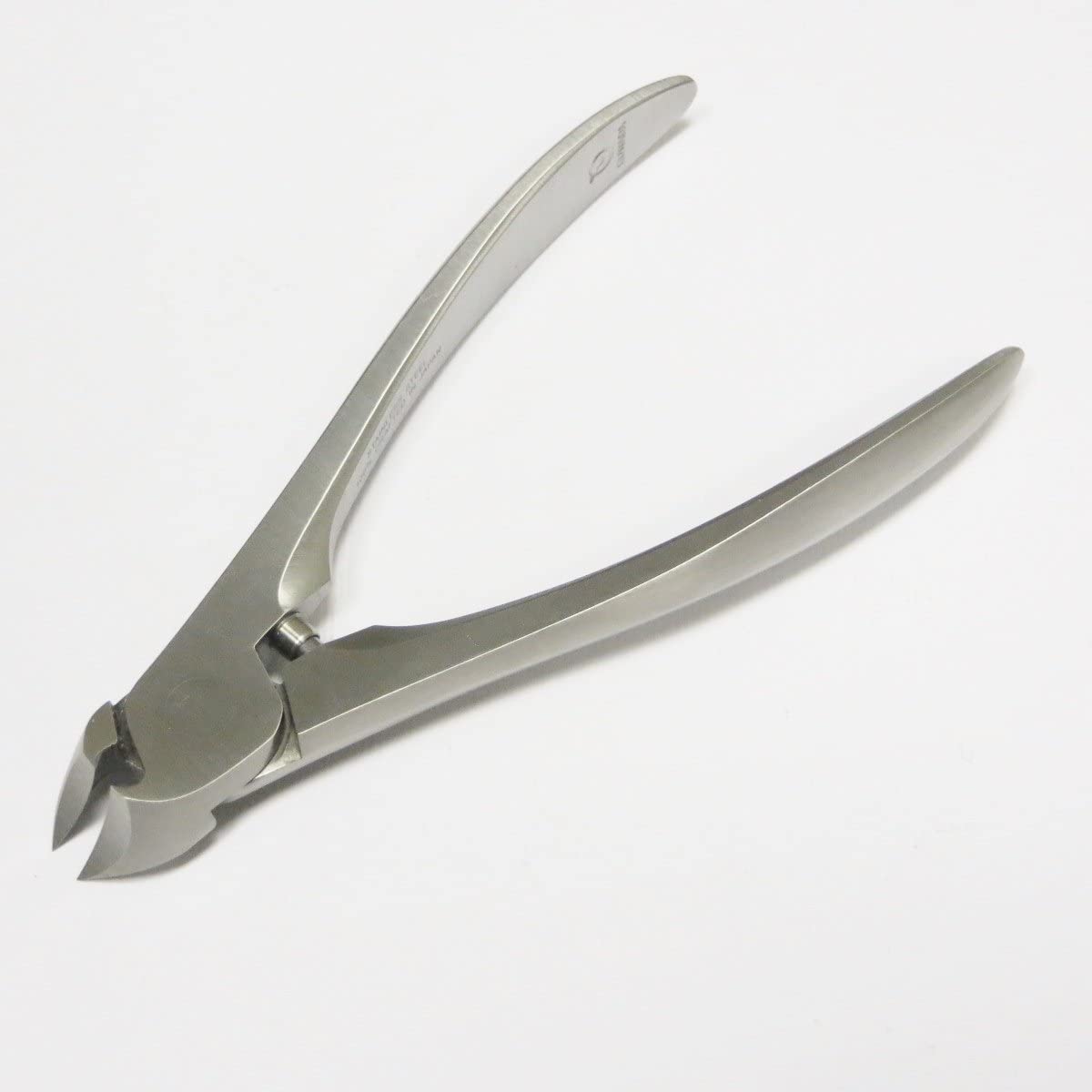
For fingernails, and for smaller hands
Suwada Classic Nail Nippers Manicure (S)
Japanese retail copy points the S at fingernails and the L at toenails. Most of the "you need strong hands for this" reviews are describing an L being used on fingernails — which is a sizing problem, not a tool problem.
Everything below comes from reading and comparing fourteen independent Japanese sources — Suwada's and Green Bell's own documentation, hands-on comparison rankings, Kaden Watch's long-form review, personal blogs and review aggregators. Nobody here has held these nippers.
Only two of the three carry star scores, and that is deliberate. The Classic L and the new Soft L both appear in mybest's measured sub-scores, so they can be put on the same footing. No model-level assessment of the S size turned up in Japanese, so it gets no stars. Copying the L's numbers across because the blade geometry is related would be inventing them.
Suwada Classic L
On sharpness, Japanese sources agree about this tool to a degree that is genuinely unusual.
mybest measured finish quality at 4.17/5. Personal blogs reach for phrases like "outstanding bite" and "the edge is clean enough that you can skip the file." The reviewer at Kaden Watch reported something more specific and more useful: the sound changes. Not the sharp snap of a lever clipper but a duller, softer give — and enough precision to take off a sliver at the very tip of the nail and nothing else.
Here is where reading the Japanese material changes the picture. The explanation for all this — that the blade severs the nail rather than crushing it — is the manufacturer's own claim, and no independent test of that mechanism exists in either language. But several unconnected reviewers describing the same change in sound and feel is decent circumstantial support for it. The English first page stops before this point and mostly paraphrases the maker.
You pay for it in handling. Measured "clippings stay put" comes in at 3.50/5 — visibly below the 4.17 for finish. Kaden Watch puts it bluntly: the clippings go everywhere. Technique recovers a good part of this, and the Japanese sources are not unanimous here — see how not to send clippings flying. The exposed cutting edge is the same story continued: Kaden Watch notes that without the dedicated case the blade gets damaged, or you do.
What works
- The most consistent verdict on sharpness across the Japanese sources, and it holds up in measured finish quality
- Curved blade leaves rounded corners — discussed in Japanese in the context of reducing nail breakage
- This listing includes the storage case. On a tool with an exposed edge that is a prerequisite, not an accessory
What to know first
- "Clippings stay put" measured at 3.50/5. Most reviewers report them flying, though not all
- Recurring comment that it takes real grip strength — often from people using an L on fingernails
- Curved blade is the wrong geometry if square-cut toenails are the goal
Best for
- Toenails, or larger hands wanting one tool for everything
- Anyone who wants corners rounded rather than square
Not ideal if
- Anyone whose main problem is ingrown nails
- Anyone unwilling to change how they cut to manage the clippings
Get the listing that includes the case. A second listing also called "Classic L" exists under a different ASIN with a different bundle, and on a tool with an exposed edge that is a safety difference rather than a price one.
See the Classic L with its case on Amazon
The version that ships with the storage case. A similarly named listing exists with a different bundle — check the product page before ordering.Suwada Soft L (new type)
The point of this model is that the blade is straight.
The Japanese sources line up on what that means. Straight and convex blades are for cutting toenails square — which is to say, for cutting in the way that keeps nails from growing into the surrounding skin in the first place. mybest, Rank-King, Green Bell's own material and Suwada's own material all organise the choice on this axis, almost word for word. The same search in English returned nothing that made the distinction. If you have been worrying about how to cut your toenails, the blade shape was decided for you before you started comparing brands.
The measurements back the ergonomics too: 3.87/5 for ease of cutting, the best of the Suwada models in that comparison. Rank-King positions this new Soft as high-grade enough for clinical use. The rubber grip draws praise for making the tool sit more steadily in the hand.
What you give up is the finish. It measures 3.75/5, below the Classic — and the aggregated comments include "the handle is too big" and "the curved section is sharp-edged, not smooth." Ease and finish are inverted on this model, which is the thing to understand about it: it is not an upgraded Classic. And "clippings stay put" is 3.50/5, the same as the Classic. That did not improve.
What works
- Ease of cutting measured at 3.87/5, the highest of the Suwada models compared
- Straight blade — the geometry Japanese guides assign to toenails and square cutting
- Rubber grip, designed to reduce the effort of closing the tool
What to know first
- Finish measured at 3.75/5 against the Classic L's 4.17
- Aggregated comments include "handle is too big" and "the curve is sharp-edged"
- Flying clippings score identical to the Classic at 3.50/5 — no improvement here
Best for
- Anyone cutting toenails square
- Anyone who wants less strain on the hand
Not ideal if
- Anyone whose priority is the cleanest possible finish on fingernails
- Anyone who wants a smaller handle
The L-size new Soft is the default way to get a straight blade. Whether a case is included is worth checking on the product page.
See the straight-bladed Soft L on Amazon
Straight blade with the rubber grip, L size. Confirm on the product page whether a case is included.Suwada Classic Manicure S
Most of the "this takes real hand strength" reviews are describing the wrong size.
Japanese retail copy is explicit about it: the S is presented for fingernails, the L for toenails. Read the Classic L's reviews again with that in mind and the complaints about grip strength resolve into people using a toenail tool on their hands. If fingernails are the job, start here. The blade is the Classic curve, so the rounded-corner character carries over from the L unchanged.
This entry carries no star scores. The models mybest tested individually were the Classic L, the new Soft and the plain model; no standalone score for the S turned up. One of the two axes above — handling — is precisely the one that changes with size, so transferring the L's number would be manufacturing a result. What justifies recommending it anyway is that the Japanese sources agree on the selection principle, even where they have not measured this particular size.
One thing the listing itself is worth knowing about: the Amazon.com title reads "Classic Nail Nippers Manicure (S) [MADE IN JAPAN]" and does not carry the Suwada name at all. Its own bullet describes it as being for thick, deformed and ingrown nails, with a metal case. If you search for the brand and expect the brand in the title, this one hides from you.
Best for
- Anyone using it on fingernails
- Anyone with smaller hands
Not ideal if
- Anyone mainly tackling thick toenails
- Anyone who wants a measured score behind the purchase
What works
- Sized for fingernails and smaller hands — the direct answer to the L's "needs strength" complaint
- Classic curved blade, so the rounded-corner finish is the same character as the L
What to know first
- Japanese reviews of the S specifically are thin, so this entry carries no stars
- Thick and toenail work is pointed at the L instead
- Flying clippings and the exposed edge are inherent to the nipper format and apply here too
Hands only, buy the S. Hands and feet, buy the L. Even within the Classic line, treat them as two different tools.
See the fingernail-sized Classic S on Amazon
The S size, aimed at fingernails. Note the listing title does not include the Suwada name. Confirm case contents on the product page.How not to send clippings flying
The biggest complaint in this article is not a defect in the tool. It is a technique problem. The Japanese reviews and the retail guidance converge on the same short procedure.
- Do not take the whole nail off in one bite. Work across it in two or three. Advancing from one edge in small steps keeps the fragments from launching. The complaints cluster around people cutting the whole edge at once.
- Put a tissue underneath. The simplest possible countermeasure, and every personal blog mentions it.
- Put it back in the case afterwards. Kaden Watch's warning is that without the dedicated case the blade gets damaged or you cut yourself on it. The case is a prerequisite, not an accessory.
The grip is also nothing like a lever clipper. You close it the way you close a pair of pliers, and the first few sessions take adjusting. Several sources note it is awkward in the non-dominant hand. If it goes badly on day one, that is not yet a verdict on the tool — which is worth holding in mind when reading the one-star reviews of anything in this category.
One honest caveat: the Japanese sources are not unanimous about the clippings. Among the comments aggregated on @cosme there are several saying the opposite — that the clippings do not scatter. The accurate statement is that most reporters say they fly, and that cutting in stages may genuinely change the experience.
If ingrown nails are the main goal
Then the answer might not be Suwada at all.
That nipper-style tools suit ingrown and thickened nails is agreed across the Japanese sources. But the maker that has optimised a design specifically for ingrown nails is Kai, not Suwada — a convex blade developed with a specialist physician. Suwada sits in the general-purpose nipper category. This is not a comment about how well it cuts; it is a comment about what it was designed for.
No listing for that Kai convex model turned up on Amazon.com, though. Within what you can actually buy in the US, the answer here is the Soft L's straight blade. In the Japanese framing, straight and convex blades are the toenail-and-square-cutting shapes — the ones matched to preventive cutting — and that is closer to the goal than the Classic's curve. Anything already painful and embedded is a medical question rather than a tool question, and outside what this article can help with.
And do not choose the "Petit" for thick or ingrown nails. It is a compact model with a jaw opening of roughly 2mm, and it looks like an appealing travel option, but Suwada's own documentation advises against it for ingrown and thick nails and points you at the Classic or the Soft instead. A manufacturer writing down that its own smaller model will not do the job is the kind of note that did not survive into any English page we found.
Two that show up in the same results
Neither is fully specified. Neither carries stars, and neither substitutes for the three above.
Classic Nail Nippers Pedicure is labelled for feet but does not state the blade shape — 120mm overall and 85g is as far as the listing goes. If the rule is that square-cut toenails want a straight blade, then an unspecified blade shape makes the new Soft the safer choice.
Black S is a carbon-steel curved blade at 10.5cm, 50g, with a 20mm jaw opening. Japanese comparisons tend to rank the Black L bundled with its metal case, but this listing ships in a clear package with no case. On a tool with an exposed edge, that is a safety difference rather than a price one.
After you buy — sharpening is not a prerequisite
You will not need it for a long time. Sharpening comes up in Japanese reviews in the context of years of use, not as something to plan for at purchase. Given how consistently the sources rate the edge, the maintenance story for the first few years is "put it back in the case" and nothing more.
That said, Suwada's own factory in Sanjō does take sharpening and parts replacement. It is a paid service, the customer covers postage, and the published turnaround is roughly a month and a half for full maintenance or seven to ten days for a spring replacement alone. You pack it up, send it in, get a quote, and a craftsman does the work before it comes back. The existence of the service is something English coverage already mentions; what reading the Japanese adds is the sense of the timescale.
What we checked was the domestic guidance, though, and whether the service can be used from outside Japan is not something the Japanese pages settle. This is not a tool to buy on the strength of that service if you are ordering from the US.
So which one
- One tool for hands and feet → Classic L. The most consistent verdict on sharpness, and there is a listing with the case
- Toenails, cut square → Soft L. The blade shape maps directly onto the goal
- Fingernails, or smaller hands → Classic S. The answer to the L's "needs strength" is a size, not a different brand
- Worried about clippings flying → how not to send clippings flying. Before it becomes a reason not to buy, some of it is technique
- Ingrown nails above all → if ingrown nails are the main goal. The optimised design is Kai's convex blade, which has no Amazon.com listing — so within what you can buy in the US, the Soft L's straight blade is the answer
One last thing that is really the whole point. In Japanese, Suwada is not written up as a standalone brand legend. It gets put on the table next to Green Bell, Kai and Maruto and compared. Seeing it as one member of a category — that is the reading the English search results are missing.