 Japan Reviewed
Short answer first. If you want one book to fall in love with, start with Witch Hat Atelier — the English Box Set 1 puts the first six volumes in one box. If you would rather have something you can finish, take Dorohedoro instead: twenty-three volumes in English, complete, ending and all.
Then there is the reason I wanted to write this in the first place. English "hidden gems" lists have been putting The Climber at number one for years, and the ones that bother to name a publisher still say there is no North American edition — only a European one. That was probably true when it was written in early 2024. It is not true now: VIZ Media picked the series up and started publishing it in April 2025.
Which is good news with an asterisk. VIZ has announced through volume 7, in October 2026, and because the English edition doubles up the original volumes, that gets you twelve of the seventeen. So the honest sentence is not "you can buy it now" — it is "you can start it now, as long as you know it does not finish yet."
That gap is the whole idea here. English lists are good at telling you which series is overlooked. They are bad at telling you what it is actually about, and whether the English edition runs out under you. All five below I read in Japanese, and for each one I went and checked where the English release stands.
How I picked them
Three things. At least eleven volumes in the original — short series get their own article, and these are the ones you settle in with. A publisher, volume count and completion status I could verify in English. And a reason they got overlooked that I could actually point at — an award, a print run, a serialisation history — rather than a vibe.
The ranking mixes "how good is it" with "how far can you get in English", so number five is not the weakest book here. Look at the individual scores for that.
The short list

Best overall — start here if you are unsure
Witch Hat Atelier
Magic is not something you are born with. It is something you draw. Gorgeous high fantasy with almost nothing harsh in it — the one you can hand to someone who has never read a manga.

Best if you want to reach the end
Dorohedoro
A man with a lizard's head goes looking for the sorcerer who gave it to him. Guts, gore and genuinely funny jokes on the same page — eighteen years of it, finished.

Best art you will stop and stare at
Blade of the Immortal
A girl hires an immortal swordsman to help her take revenge. Panels composed like woodblock prints, and content that will absolutely not be for everyone.

The one whose obscurity has a documented cause
Homunculus
Drill a hole in your skull and you start seeing what is bent inside other people. A psychological thriller with a very strange history behind it.
The one English coverage has most wrong
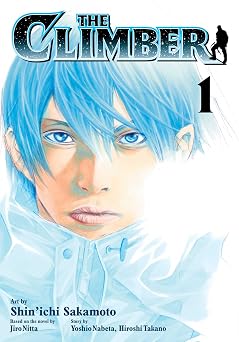
The Climber
A boy climbs the outside of his school on a dare and never comes back down. Based on a real mountaineer, drawn well enough to hurt.
Everything I say about the stories comes from reading all five in Japanese. Everything about the English editions comes from publisher announcements and retailer listings — I have not read the translations, so I have nothing to say about them. Only how many volumes there are, and whether they finish.
One note on the third score, "How overlooked it really is": that measures how well a book fits the word underrated, not how good it is. The number one pick scores lowest there, because in Japan it is not overlooked at all.
Witch Hat Atelier
It takes the oldest rule in fantasy — you are either born magic or you are not — and breaks it in the first volume.
Coco is a village girl who has wanted to be a witch since she was small, and has been told all her life that witches are born, not made. Then a travelling witch named Qifrey passes through, she catches him working a spell, and she sees the thing witches have spent centuries hiding: with the right tools, anyone who can draw the sigil can cast it. She tries one out of curiosity, it goes badly enough to turn her mother to stone, and she ends up living in Qifrey's atelier as his apprentice.
So magic here is not talent. It is draughtsmanship — a craft with tools, mistakes and technique, which is why the book looks the way it does. Japanese critics keep landing on the same things: the egalitarian logic of the magic system, the absurd density of the linework, costume design people actually use the word elegant about, and a real willingness to write about disability and social exclusion inside a children's-adventure shape. There is very little violence in it. This is the one I would hand to someone who has never read a manga, and that is half of why it is at the top.
The other half is the gap. Over nine million copies in print as of June 2026. It was nominated for the Manga Taisho in 2018, placed sixth in that year's Kono Manga ga Sugoi!, and won first place in the booksellers' own national recommendation poll. Calling that a hidden gem, in Japan, is absurd.
In English it is a different story. It took an Eisner and a Harvey in 2020 and another Harvey in 2025, and it still barely comes up when people swap manga recommendations. It is not a book Japan overlooked. It is a book the English conversation keeps walking past.
I reread this one purely to look at it. Once you know where the story goes, there is still a whole other book sitting there in the drawing.
What works
Almost no gore and no sexual content - the easiest book here to give to somebodyNine million copies in print, plus Eisner and Harvey wins, so the quality is not a matter of tasteThe English edition tracks the Japanese release closely, so you are not left waiting for yearsWhat to know first
Still running - the Japanese edition reached volume 16 as of August 2026If you specifically want something nobody in Japan has heard of, this is not itBest for
Anyone picking just one book off this list. Readers who love dense, beautiful art and design. Anyone shopping for a friend who does not read manga yetNot ideal if
Readers who wait for a series to finish. Readers hunting for genuine obscurityKodansha Comics publishes it in English, and the tidy way in is Box Set 1, which collects English volumes 1-6 with a set of art cards (August 2025). After that you pick up singles — volume 13 landed in January 2025, volume 14 in March 2026, with volume 15 announced for December 2026.
See Box Set 1 on Amazon
English volumes 1-6 plus art cards, the official box set. The series is still running in Japan, so after this box you continue in single volumes.Dorohedoro
This is the one you can start today and actually finish.
Caiman has the head of a lizard and no memory of who he used to be, because a sorcerer did that to him. With his friend Nikaido he hunts sorcerers through a rotting city called the Hole, killing them one by one in the hope that eventually he gets the right one. Sorcerers arrive from another world whenever they feel like it, use the people who live there for experiments, and leave. From street level, magic is closer to a recurring natural disaster than to a superpower.
Calling it dark fantasy undersells it. Japanese write-ups reach for the same formula every time — comedy, horror, cooking and human drama all crammed into one chaotic world — and that is accurate. Sorcerers wear grotesque masks that look like they came off a death metal sleeve, people get opened up on the page, and two panels later there is a joke that genuinely lands. The combination is the trick, and it is worth knowing before you start that this is not a relentlessly bleak book.
The flip side: heads come off and organs come out, regularly. If that is a wall for you, you will hit it early and you will know.
What is striking is how consistent Japanese readers are about it. Round-ups of "minor manga that are actually great" describe it as the one that built a fanatic following without ever going mainstream; lists of overlooked dark fantasy include it; personal blogs use the same phrase. This is a series Japanese readers have been calling a hidden gem themselves, which makes it the purest fit on this list. Q Hayashida started it in Monthly Ikki in 2000, it changed magazines three times, and it finished in 2018 at twenty-three volumes — a series that survived on its readers rather than on being anybody's flagship.
Fair warning on the evidence, though: this is the one entry where "why it was overlooked" rests on repeated opinion rather than a record. I could not find award nominations behind it the way I could for the other four.
The art threw me at first. Once I got past that, I could not imagine the story drawn any other way.
What works
Twenty-three volumes, complete, and complete in English too - you can reach the endThe horror and the comedy sit together, so it never becomes a grindJapanese round-ups agree on it independently: minor, and adored by the people who found itWhat to know first
Decapitation and viscera turn up regularly, and it does not ease you inThe art and the world are an acquired taste - you will know within two volumesThere is no official box set, so it is twenty-three singlesBest for
Readers who want a long finished series they can see through to the end, and who can take gore alongside a strong stylistic streakNot ideal if
Anyone squeamish about blood or anatomy. Anyone who wants clean, pretty artworkVIZ Media has all twenty-three volumes in English and the series is complete there. There is no official box set — the "complete 23-volume sets" you will see listed are third-party bundles, and this site does not link those — so it is volume one and onwards. Long, but the whole thing is waiting for you.
See volume 1 on Amazon
VIZ's English volume 1. No official box set exists, so this is where you start collecting - all 23 volumes are out.Blade of the Immortal
The warning goes first. Japanese book databases carry the same note about this series: extraordinary draughtsmanship, attached to material that is crude, grotesque, psychologically unsettling and sexually disturbing, and readers should know that going in. That is their wording, not mine, and it appears on several sites independently. Backing out here is a perfectly sensible thing to do.
Still with me? Rin's parents are killed by Anotsu, who leads a sword school called Ittō-ryū, and she goes looking for a bodyguard to help her take revenge. She finds Manji, a swordsman who cannot die because of the bloodworms living in him. What follows is a long chain of duels against increasingly strange opponents, in a period setting that is more swordplay serial than samurai drama.
Almost every Japanese review of it ends up in the same place: the art. Female characters drawn as both erotic and genuinely dangerous swordfighters; the big moments composed like single woodblock prints. This is a book carried by the strength of individual panels rather than by its plotting, and that is how I remember it too — as a series where you stop on a page.
The record behind it is solid. Hiroaki Samura serialised it in Monthly Afternoon from June 1993 to December 2012. It took an Excellence Award — not the Grand Prize — in the first Japan Media Arts Festival in 1997, and in 2000 the English edition won the Eisner for Best U.S. Edition of International Material. Seven and a half million copies in print as of December 2016. Japanese "great completed series" lists still push it hard.
So the neglect is on the English side. A quarter of a century after that Eisner, it sits well outside the view of readers who know every Shonen Jump series of the same era — the ones we cover in the completed battle manga roundup — and period swordplay is a narrower door to walk through than a tournament arc. It took me a while to settle into the archaic dialogue myself.
The low ease-of-entry score is the content warning plus the period register, not a judgement on quality.
What works
Japan Media Arts Festival Excellence Award in 1997 and an Eisner for the English edition in 2000The set-piece panels are extraordinary - Japanese reviews keep reaching for the woodblock-print comparisonComplete, and the deluxe hardcovers carry it to the end in ten booksWhat to know first
Violence and sexual content are both strong enough that Japanese book databases flag them explicitlyThe current edition is the hardcover line, so the entry point is a bigger book than a single paperbackIf period drama is unfamiliar territory, the opening stretch is heavy goingBest for
Readers who know what they are signing up for and want one long series carried by its artwork. Anyone comfortable with samurai-era settingsNot ideal if
Readers avoiding sexual or violent content. Anyone who prefers buying a series a little at a timeOne piece of confusion worth clearing up: you will see the Japanese edition listed at thirty volumes and the English at thirty-one. It is the same 207 chapters. Kodansha packed more chapters per book, Dark Horse packed fewer — nothing was added.
The current way in is Dark Horse's Deluxe hardcover line, which collects those thirty-one English volumes three at a time into ten hardcovers that run to the end. There was an older single-volume paperback run, which finished in April 2015, but the hardcovers are the current edition and the sane place to begin.
See the deluxe edition on Amazon
Deluxe hardcover volume 1, first of ten. Each one collects three of the older English volumes, and the ten of them cover the complete series.Homunculus
Another warning up front. Homelessness, drugs, the sex trade, and a hole drilled through a man's skull. The material is heavy from the first page to the last, and pretending otherwise would be doing you a disservice. This is not a light read.
Susumu Nakoshi is thirty-four and living out of his car in Shinjuku. A medical student named Ito offers him money to undergo a trepanation — a hole bored into the skull. He says no. Then his car gets towed, and he says yes. Afterwards he finds that if he shuts his right eye and looks at someone with his left, whatever is warped inside that person surfaces as a grotesque shape. He calls them homunculi.
It is a thriller, or maybe psychological horror. Each stretch of the story is Nakoshi getting entangled in one person's damage. And the more of other people's damage he handles, the more of it comes back onto him — that structure is what makes the book so uncomfortable to sit with. It is not a thing to recommend lightly, but for the readers it hits, it goes deep.
The Japanese numbers are ordinary seinen numbers. Hideo Yamamoto began it in Weekly Big Comic Spirits in 2003, it ran to fifteen volumes, and it has over four million copies in print.
What is not ordinary is what happened next. In 2008 the author was arrested on cannabis charges, and serialisation was suspended that year. Usually "why did this get overlooked" comes down to something vague about the magazine being small or the book being quiet. Here there is a year and an event on the record. I could not find a single English-language review that mentions it. There is a 2021 live-action adaptation on Netflix, and the manga itself is still barely known in English regardless.
I hit a wall more than once reading it. I finished because the discomfort turned out to be the point.
What works
The only book here whose obscurity has a documented year and cause behind itOver four million copies in print - well read by seinen standardsRuns an entire psychological thriller off one idea: you can see what is bent in other peopleWhat to know first
Homelessness, drugs, the sex trade and skull surgery - it will not be for everyoneThe English release has not reached the end of the series yetDespite the Netflix film, the original is still thinly covered in EnglishBest for
Readers used to heavy seinen material who can enjoy a book that is deliberately unpleasant to sit withNot ideal if
Anyone starting out with manga. Anyone wanting to feel good afterwards. Anyone who finds psychologically disturbing subjects difficultSeven Seas has it in English, in oversized omnibus editions that pair two volumes at a time. Five of those are out, published between June 2023 and July 2024, covering volumes 1-2 through 9-10. That does not reach the end of the fifteen-volume original, so go in expecting to wait.
See the first omnibus on Amazon
Seven Seas omnibus 1, collecting volumes 1-2. Five omnibus volumes are out so far, which does not yet cover the whole series.The Climber
It starts with the outside wall of a school building.
Buntaro Mori is a transfer student who would rather be left alone, and on his first day his classmates dare him to climb the school. He could easily have died doing it. He does it anyway — and the feeling at the top turns out to be the first time he has felt alive. From there he goes at climbing the way people go at an addiction. The school wall becomes real mountains soon enough, and early on the book puts it to you plainly that mountains kill people. Alone with that, he keeps going towards solo ascents.
Mori is modelled on Buntaro Kato, the real solo mountaineer. It is a climbing manga whose register is contemplative rather than athletic, and Japanese reviews come back again and again to how overwhelming the artwork is. The pacing is not fast. This is a book you read for the drawing, and if you open it expecting spectacle you will feel the difference immediately.
The record is there. Shin-ichi Sakamoto drew it in Weekly Young Jump from November 2007 to October 2011, seventeen volumes, and it took an Excellence Award at the 14th Japan Media Arts Festival in 2010. Japanese review sites are unanimous that it punched well above the weight of its unglamorous subject.
I do not climb. I still read it with my hands tight on the book. You need to know nothing about the sport.
Now the awkward part: the English edition does not finish. VIZ Media licensed it in 2024 and put out volume 1 on 15 April 2025, and volumes are announced through volume 7 in October 2026. Because this edition collects two original volumes per book, volume 7 gets you to twelve of the original seventeen. Start today and the announced run does not reach the end.
I included it at number five anyway, and here is why. This is the series English "underrated manga" lists put at number one, and what they say about the English edition is out of date. The few articles that name a publisher — the most-cited one from February 2024 — say there is no North American release, only a European one. That was probably right when it was written. The 2024 licence and the 2025 launch make it wrong now, and nothing on the English first page has caught up.
What works
Excellence Award at the 14th Japan Media Arts Festival, 2010Japanese reviews return to the same word for the artwork: overwhelmingBased on a real mountaineer, and it asks no prior knowledge of climbing from youWhat to know first
The English edition is unfinished - even volume 7, due October 2026, only reaches 12 of the original 17The pace is slow, and it is the wrong book for anyone wanting momentumLoss and disaster are part of the subject; it is drawn from real events and it does not soften themBest for
Readers happy to follow a series as it comes out, who want to be there from volume 1. Anyone who reads for artworkNot ideal if
Readers who want to reach an ending. Anyone after something fastIt is published under the VIZ Signature imprint, starting at volume 1 and continuing. The one thing to know before you begin: what you can collect today stops partway.
See volume 1 on Amazon
English volume 1. Volumes are announced through volume 7 in October 2026, which still only covers 12 of the original 17 - the series is not finished in English.There are two kinds of underrated
Lining these five up made one thing obvious: "underrated" is doing two completely different jobs, and English lists blur them together.
- Overlooked in Japan too — Dorohedoro, which Japanese readers themselves have been calling a hidden gem for two decades, and Homunculus, whose interruption is a matter of record.
- Celebrated in Japan, missing from the English conversation — Witch Hat Atelier (nine million copies, first place with booksellers), Blade of the Immortal (Media Arts Festival, Eisner) and The Climber (Media Arts Festival).
Both groups are books more people should be reading. But pretending they got there the same way is how you end up writing "this hidden gem is a massive hit in Japan" — a sentence that mostly proves the writer has not looked at Japan.
For what it is worth, Silver Spoon came up as a candidate and did not make it. Seventeen million copies in print in Japan is not underrated in either sense.
So where do you start
- One book, and something you can pass on → Witch Hat Atelier. Six volumes in one box, though the series is not finished
- Something you can read to the end → Dorohedoro. All twenty-three in English, collected one volume at a time
- A long series carried by its art → Blade of the Immortal. Ten hardcovers to the finish — after you have read the content warning
- You read heavy books on purpose → Homunculus. Five omnibus volumes out, not yet the whole series
- You want to be there from volume 1 → The Climber. Just know that today's shelf stops partway
If you take one thing away, make it this: "there is no English edition of this" is a sentence with a shelf life. The Climber is the proof. It is not missing. It just is not finished.
See Witch Hat Atelier Box Set 1 on Amazon
English volumes 1-6 plus art cards, the official box set. If this list left you undecided, this is the one.