 Japan Reviewed
If you only read one, read Fullmetal Alchemist: all 27 volumes come in a single official box set, so there is nothing to work out. If you are buying with a reread in mind, read Attack on Titan. If sports manga has never appealed to you, read Slam Dunk — it is not really about the sport.
Now the part almost nobody writes down. All three are finished, and yet "buy the whole thing" means something different for each of them. Only Fullmetal Alchemist arrives in one box. Attack on Titan's official box sets are split by anime season into seven of them, and there is no official box containing all 34 volumes. Slam Dunk has no official box set at all — you buy 31 individual volumes.
These are three I have read in Japanese and gone back to more than once, in my own order of preference. I do not spoil any of the endings.
Start here

If you only read one
Fullmetal Alchemist
Conventional in shape, and it never falls apart. The only one of the three you can buy complete in a single box — which also makes it the safe first manga for someone who has never read one.

If you are buying to reread
Attack on Titan
Read it once for the story, again for everything you missed. It is also the most awkward of the three to buy: seven seasonal boxes, a 12-book omnibus line, or 34 singles.

If sports manga has never appealed
Slam Dunk
You do not need to care about basketball. It is not really about basketball. Worth knowing first: there is no official box, so it is 31 singles.
One thing to be clear about: I read all of these in Japanese. I cannot tell you anything about the English translations or the paper they are printed on. What I am judging is the stories — the only thing I say about the English editions is what exists and how it is sold.
Fullmetal Alchemist
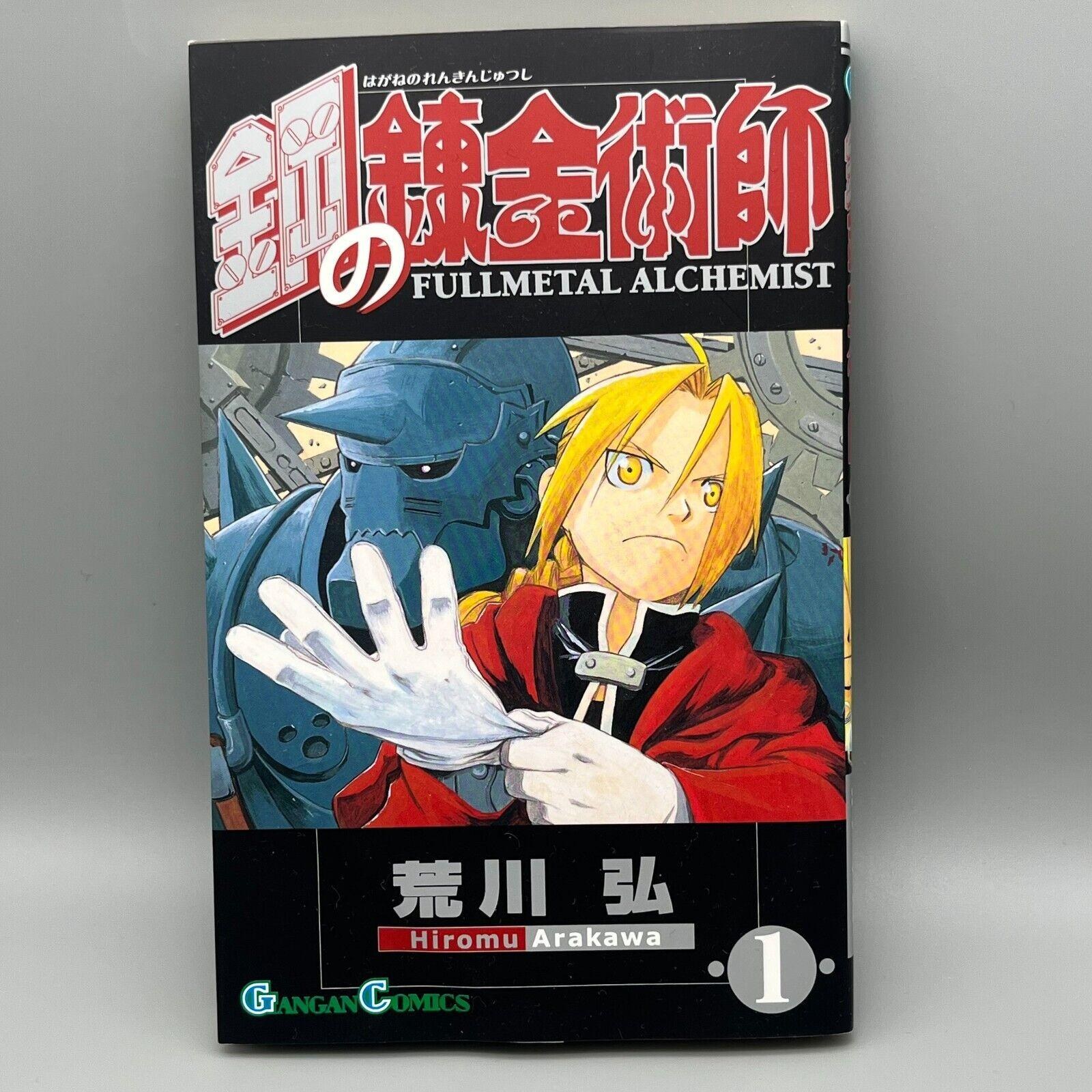
Twenty-seven volumes. The one I recommend first.
Reduced to its shape, this is an ordinary adventure manga. Someone travels, meets people, fights stronger opponents, gets better.
Underneath that there is a second story about nations, about war, and about what things cost. The rule the series is built on — that getting something means giving up something of equal value — is not just a magic system. It comes back as a question, over and over: what are you willing to lose for this?
What impresses me every time I reread it is how little is wasted. A minor character from the early volumes matters at the end. The author knew where this was going and got there. In long serialised manga that is rare.
The antagonists get the same care. They are not obstacles standing between the hero and the finish; they want things, for reasons. That is what gives the book its weight.
- Right for you if you are reading your first manga, or you do not want to be let down at the end
- Not for you if you are tired of the conventional adventure structure
What works
- Holds together to the last page. The setup pays off
- Easy to read and genuinely serious at the same time
- The antagonists are as interesting as the leads
What to know first
- The early art is rougher than the later art
- It swings between comedy and real cruelty, sometimes fast
Buying it is the simplest of the three. Viz Media's Complete Box Set holds all 27 volumes, plus the novel The Ties That Bind and a double-sided poster. That one purchase is the whole series. Watch out for the 3-in-1 omnibus edition sold alongside it — it is easy to mistake for the box set, so check which volumes a listing actually contains.
See the 27-volume box set on Amazon
The official Viz Media box set: all 27 volumes plus a novel. Not the same product as the 3-in-1 omnibus edition — check the volumes listed on the page.Attack on Titan
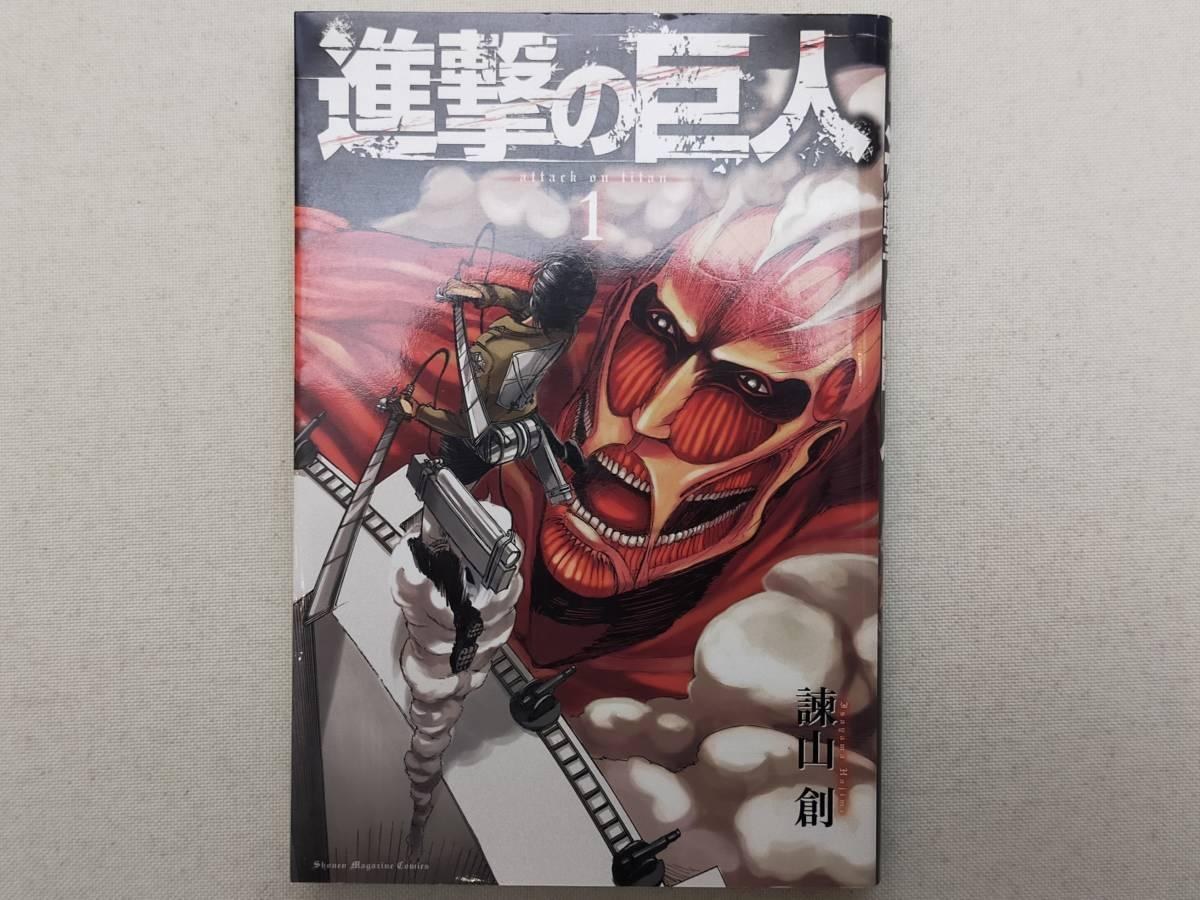
Thirty-four volumes. There are two ways to read it.
It looks very simple at first. Humans are fighting giants. That is the whole premise.
Then the questions start. What are the titans? Why is humanity inside the walls? What is outside them? And every time one of those gets an answer, the answer produces a new question.
That chain is why I keep going back to it. The first read is following the story. The second is reading early scenes already knowing what they will turn out to have meant, and the same pages are not the same pages.
The other thing: as it goes on, good and evil stop being useful categories. Both sides have something they believe is right, and those beliefs are what collide. What stays with you afterwards is less the fighting than the uncomfortable questions underneath it — about war, about inherited hatred, about how history gets told by whoever survived it.
- Right for you if you like thinking while you read, or you are buying with a reread already in mind
- Not for you if you want to finish a series feeling good, or you would rather try something short first
What works
- Densely set up. The second read is a genuinely different book
- Refuses the simple version of who is right
- Thirty-four volumes telling one story, not several
What to know first
- How the ending lands varies enormously from reader to reader
- The early art is visibly rough
- Thirty-four volumes is real time and real money
And then there is the buying, which the next section covers properly. The short version: most things sold as an "Attack on Titan box set" are not the whole series. If you only want to find out whether it is for you, volume 1 is the unambiguous way in.
See volume 1 on Amazon
Volume 1, from Kodansha Comics. There is no official box set covering all 34 volumes.Slam Dunk
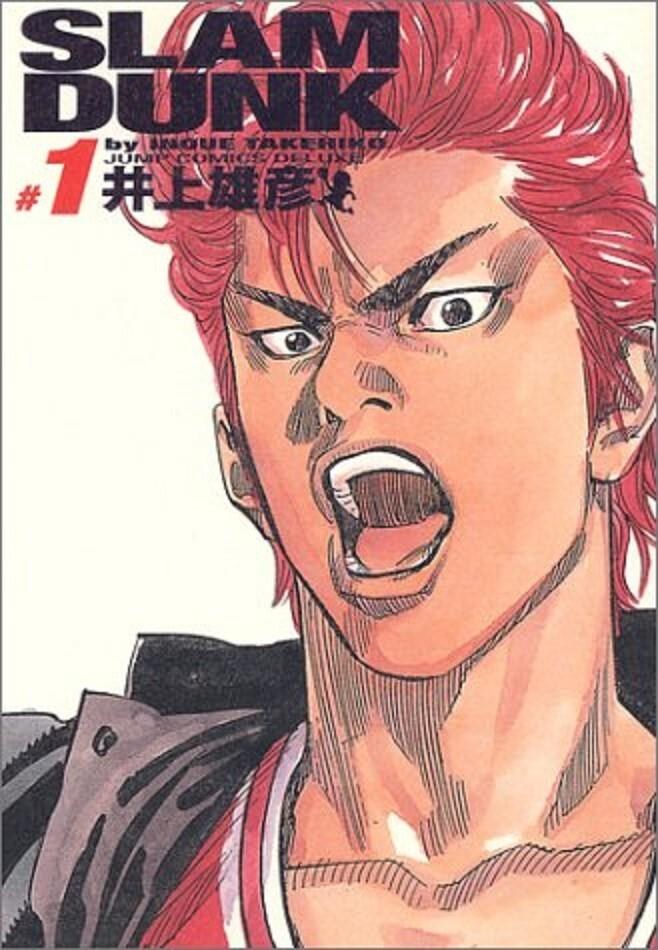
Thirty-one volumes. Not really a sports manga.
You do not need to know anything about basketball. More to the point, basketball is not what you end up reading it for.
Hanamichi Sakuragi starts as a complete beginner. He does not know the rules. He does the boring drills. He gets slightly less useless, then useful, then necessary. The progression is patient and easy to follow, which is most of why it works.
But it is not a story where effort simply produces victory. Better opponents are better. Talent is unevenly distributed. People get injured. Teams argue with themselves. What the series is actually about is carrying on anyway.
The games are unusual too. In the middle of a match you get someone's history, what they are carrying, where their confidence goes when it goes. So what you are watching is not the score — it is what happens to this person.
And it is not only Sakuragi. Rukawa, Akagi, Mitsui, Miyagi, and the players on the other side of the court all have their own reasons for being there. Which one you like changes what the book is.
One thing worth knowing going in: the way it closes divides people. Some readers feel it stops while the story still looks like it has somewhere to go. I did not read it as a series being cut short — the last game is drawn as the last game — but knowing that it ends this way changes how the final volume lands.
- Right for you if you read for characters changing over time, or you have always skipped sports manga
- Not for you if you want something to analyse, or you need a clean, conclusive finish
What works
- Needs no knowledge of the sport whatsoever
- The supporting cast and the opposition are fully drawn
- Never pretends effort guarantees a result
What to know first
- Its ending is unusual and will not suit everyone
- The early comedy runs long before it finds its subject
- The least rewarding of the three to reread
There is no official English box set. The main thing Amazon.com surfaces as a "complete set" is the Japanese-language edition from Shueisha, and the English "all 31 volumes" bundles are assembled by third-party sellers rather than the publisher. Buying it properly means buying 31 individual volumes.
See volume 1 on Amazon
Volume 1 of the English edition, from Viz Media. There is no official box set — the 31 volumes are sold individually.How to buy all three — they are not alike

This is the part I think is genuinely useful. A series being finished and a series being buyable in one piece are different things, and these three happen to be one example of each.
- Fullmetal Alchemist — one official Complete Box Set. Nothing to decide
- Attack on Titan — there is no official box for all 34. Three options instead, below
- Slam Dunk — no official box. Thirty-one singles
Attack on Titan deserves the detail. The official box sets are split by anime season, into seven of them:
| Box set | Volumes |
|---|---|
| Season 1 Part 1 | 1–4 |
| Season 1 Part 2 | 5–8 |
| Season 2 | 9–12 |
| Season 3 Part 1 | 13–17 |
| Season 3 Part 2 | 18–22 |
| The Final Season Part 1 | 23–28 |
| The Final Season Part 2 | 29–34 |
Separately there is an omnibus line (Omnibus / Colossal Edition) that collects all 34 volumes into 12 books at a different trim size. It divides the story differently from the singles, and it is the easiest thing here to confuse with the box sets when you are buying. Pick one route — the seven boxes, the omnibus, or 34 singles — before you start buying.
So which one
- If you only read one — Fullmetal Alchemist. It will not let you down, and it arrives in one box
- If you are buying to reread — Attack on Titan. The second pass is a different book
- If this is your first manga — Fullmetal Alchemist, then Slam Dunk
- If sports manga has never appealed to you — Slam Dunk. It is not about the sport
- If you want to try one volume first — Attack on Titan or Slam Dunk. Both start as singles
Questions
I have watched the anime. Is there a point in reading it?
Yes. With Attack on Titan especially, going back through the setup at your own pace is a different experience. With Slam Dunk, the anime does not cover all of the manga, so the rest of it is only in print.
Which is shortest?
Fullmetal Alchemist, at 27 volumes.
Are all three fine for a beginner?
Fullmetal Alchemist and Slam Dunk, yes. Attack on Titan is the most structurally complicated of the three, so it is a reasonable one to save for second or third.
How I picked these
Three tests. It has to be finished. I have to have reread it. And the reread has to give me something. This is not a comprehensive ranking, ongoing series were never in scope, and I do not summarise plots or explain endings here.