 Japan Reviewed
Here is the short answer. If you are only picking one, pick Planetes. If you want to sink into a cyberpunk world, pick Battle Angel Alita. If you want to finish something this weekend, pick Girls' Last Tour.
Most English-language lists of sci-fi manga compete on volume. One hundred and nine titles. Fifty. Thirty-four. Plenty of names, no filter. A four-volume series sits in the same column as a forty-volume epic, and the fork you are actually standing at — do you want hard science fiction, or do you want atmosphere? can you start today and actually finish? — never gets answered.
This list answers it. Two things make that possible: sorting by what you are in the mood for, and using the Seiun Award, the prize Japan's own science fiction fans vote on every year. Neither shows up on the English first page.
Who this is not for
- Anyone who wants to follow something still running. All six here are finished, and that was a condition of getting on the list.
- Anyone who wants an opinion on the English translation or the printing. I read these in Japanese, so I cannot speak to how the English reads. What I can tell you is the shape of the release — how many books it takes to reach the end.
- Anyone after mystery-flavoured suspense. The mystery manga list will get you there faster.
What I chose on
Three things. (1) You can read it to the end in English — nothing here has an English release that stops partway. (2) It is finished. (3) There is enough Japanese-language coverage to support sorting it by mood.
That third one is the spine of the list. The Seiun Award for Best Comic, decided by a vote of Japanese science fiction fans at the national SF convention, is a signal English roundups almost never touch. Four of the six below have won it: Planetes (2002, 33rd), Parasyte (1996, 27th), Knights of Sidonia (2016, 47th) and Girls' Last Tour (2019, 50th).
And to be straight with you: BLAME! and Battle Angel Alita have not won it. Both are fixtures on every English list of sci-fi manga, and Japan's fan vote has never gone their way. They are here anyway, because Japanese reviews are consistently strong on both in the cyberpunk direction. Being able to say the list was not simply assembled out of a prize list is what makes the prize useful in the first place.
The short version — if you have thirty seconds

Best overall — the hard SF pick
Planetes
A near future where working in space has become an ordinary job, told from the side of the people doing the work. Nothing flashy — and the strongest science fiction on this list. For a quiet weekend, sat down properly.

Hard SF you can settle into for the long haul
Knights of Sidonia
A colossal structure carrying what is left of humanity, and something inhuman outside it. The scale and the ensemble cast run at the same time. A series to live with.
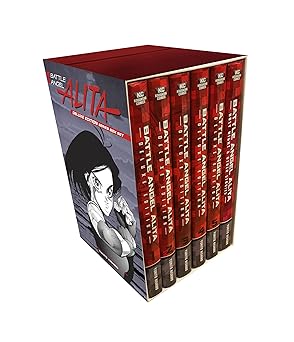
For cyberpunk
Battle Angel Alita
A machine body and a wrecked city. Art dense enough that you would never guess it started in 1991, and people are still reading it. For a night when you want the atmosphere.

To finish in a weekend
Girls' Last Tour
Two girls travelling through a world that has already ended. A harsh premise carrying a startlingly gentle everyday on top of it. The shortest here, and the hardest to put down.

The classic, read as science fiction
Parasyte
What happens if a parasitic organism has to share a life with you. Science fiction wearing a horror face. For a day when you feel like doubting people.

If you want difficult, and want to sink into it
BLAME!
An artificial city that will not stop growing, and a humanity being swallowed by it. Almost nothing is explained. You do not so much read it as get lost in it.
Everything here is built from Japanese-language material — the original books, plus Japanese reviews, criticism and blogs. The Seiun Award record was cross-checked against four independent Japanese sources that all agree, and each score below aggregates two to three independent Japanese sources on the one axis that the Japanese reviews of that title actually talk about — which is why different titles carry different axes. That is what the "Japanese reviewer consensus" label means: what I have read is the work, not the English book.
Here is what the axes mean. Hard SF is how far the scientific setting and the technology sit at the centre of the story rather than at the edges. Cyberpunk is how thick the texture is — decayed cities, mechanised bodies, a world after the end. The two do not get along, and Japanese reviews almost always reach for one vocabulary or the other, never both. The six titles below split three and three.
Planetes
A story from the shop floor of an era where going to space stopped being a big deal.
The setting is a near future in which space development is simply part of how the world works. This is not a heroic voyage; it is written from the side of the people who work there. The comparison Japanese reviews keep reaching for is The Martian or The Expanse with the high-tech set pieces taken out and the business of living in space left in.
The position Japanese reviews put it in, again and again, is "the hard SF benchmark". It won the Seiun Award for Best Comic in 2002, which makes it the title on this list where the "Japanese fans chose this" signal is doing the most work. Ratings on Japanese review sites line up high and stay there.
What stayed with me most from reading the original was not the technical writing but the writing about people. The science fiction frame is rigid, and yet what you remember afterwards are faces — that balance is what puts it a clear head above the other five.
What works
The scientific setting is load-bearing, not decorationTwo books in English — almost no risk of giving up on lengthSpace SF that reads as a human dramaWhat to know first
If you come for combat and action, it will feel like a letdownIt does not pull you along on a big hook — the register stays close to everyday lifeBest for
People who like grounded space-development SF. People who want one science fiction story they can actually finish. People who read SF novels but have never read mangaNot ideal if
People who want the decayed atmosphere of cyberpunk. People who want spectacleThe English edition is Dark Horse's omnibus, which folds the four original Japanese volumes into two books. Volume one is enough to know whether the rhythm is yours.
See the English omnibus volume 1 on Amazon
Omnibus volume 1 in English, covering the first two original volumes. Two books and you are at the end.Knights of Sidonia
The far future. Humanity's survival rides on one enormous structure, and something inhuman is outside it.
The Sidonia is a structure large enough to hold an entire city, and the things called Gauna come for it. The skeleton looks conventional; what is on it is considerably harder than that.
Japanese reviews are consistent about this one. "Tsutomu Nihei works in hard SF, and every world he builds is set in a far future" is the line, alongside readings that place its appeal in the sheer scale of the Sidonia itself, the alienness of the Gauna, and the way relationships shift across a large cast. It won the Seiun Award for Best Comic in 2016.
Honestly, I struggled through the first few volumes getting the cast and the structure straight in my head. That is the stiffness of the entry, and it cuts both ways — get past it and the feeling of people living their lives inside a vast machine starts to pay. Start this one expecting a long relationship.
What works
The worldbuilding is dense and genuinely convincing as far-future SFFifteen volumes, finished, and the English release goes all the wayThe giant-structure art is a pleasure in itselfWhat to know first
The opening throws terminology and characters at you at once, and it takes a while to holdIt is an ensemble piece — if you want to follow one protagonist, it will feel scatteredBest for
People who enjoy reading their way into a far-future setting. People who want one long series to disappear into. People who love giant structures and inhuman designNot ideal if
People who want something short — fifteen volumes is the longest here. People who find tracking a setting a choreThe English edition is Vertical's, all fifteen volumes. The quickest way to find out whether this density suits you is the digital first volume.
See volume 1 in English (Kindle) on Amazon
Volume 1 in English (Kindle). If the texture here works for you, fifteen volumes stops being a length and starts being a feature.Battle Angel Alita
Mechanised bodies and a city gone to seed. As a door into cyberpunk, the easiest one here to walk through.
A cyborg protagonist, fighting. Machine bodies, a ruined city, violence kept at close range. Every element is present and accounted for.
On the Japanese side it is described as "published in 1991, a monument of science fiction manga that has not faded", and it turns up by name in Japanese rankings of manga with cyberpunk worlds that found an audience abroad. Ratings on review sites are high. But as noted above, it has not won the Seiun Award for Best Comic. Japanese reviews tend to talk about it in the vocabulary of combat and action, and essentially never in the vocabulary of hard SF — which is why the only axis it carries here is cyberpunk.
Reading the original, the first thing that struck me was the density of the art. It is a book that slows your reading speed down on its own, and in this case that is not a fault.
What works
The thickest cyberpunk texture of the sixHeavily detailed art — each book carries real weightThe official complete edition comes boxed, so there is no guesswork about what to collectWhat to know first
If you want scientific rigour in the setting, it will feel thinFight scenes carry a lot of the load — the wrong direction if you want quiet SFBest for
People who want to breathe the air of a cyberpunk city. People who like cyborg and prosthetic-body SF. People who want art they can read intoNot ideal if
People who enjoy hard SF for the reasoning. People who do not get on with fight scenesThe current official English edition is Kodansha's Deluxe release — all five books plus a book of short stories, boxed together. It is one of the few titles here where you are not buying your way forward one volume at a time.
See the Deluxe complete box set on Amazon
The official Deluxe Complete Series Box Set — five books plus the short stories. Straight through to the end with nothing to add later.Girls' Last Tour
Two girls travelling through the world civilisation left behind.
An enormous structure you cannot see the shape of, and small humans moving through it. It is a story about the end of everything, and the air in it is astonishingly gentle. That gap is the whole book, and Japanese reviews put their finger on it exactly — "an incredibly relaxed atmosphere for how harsh the world is".
What I find interesting is that several Japanese reviews trace the influence of BLAME! in it: the same contrast of an unknowable megastructure against the small figures inside it. It won the Seiun Award for Best Comic in 2019, and it is complete in six volumes — the shortest thing on this list.
There is a reason it only carries one axis. I have left the hard SF score off because Japanese reviews raise "scientific inconsistencies that nag in places", and putting a number on the same ruler as the others would mislead you: this is not a book to read for scientific precision. I read the original straight through, unable to stop turning pages. Short, finished, and full of the end of the world — that is what you pick it for.
What works
Six volumes. The shortest of the six and the hardest to put downThe atmosphere of its ruined world is distinctive — there is little else quite like itThe gentle everyday scenes keep a story about the end of the world from being heavyWhat to know first
Japanese reviews do flag inconsistencies that will snag readers who care about scientific coherenceIt is not a story where things keep happening. It is a quiet bookBest for
People looking for something they can finish in a weekend. People who want the atmosphere of a post-collapse world and nothing heavier. People drawn to BLAME! who bounced off how difficult it isNot ideal if
People who want the reasoning of hard SF. People who expect a story to keep moving hardThe English edition runs to all six volumes. The digital first volume will tell you within an hour whether this quiet is for you.
See volume 1 in English (Kindle) on Amazon
Volume 1 in English (Kindle). The kind of book where, if it lands, you are at volume six before you notice.Parasyte
A world where organisms that live inside people have appeared. It wears the face of horror and asks the questions of science fiction.
On the outside it is body horror. Inside it is science fiction that asks what a human being actually is, head on. The whole world — creatures that eat people, living side by side with people — is built to hold that question up.
Japanese criticism rates it highly. There is the fact of the double win, the 17th Kodansha Manga Award and the 27th Seiun Award for Best Comic, and the kind of description that follows it around: a masterpiece among masterpieces, strong in its message and outstanding as entertainment at the same time. What you will almost never find, though, is Japanese reviews reaching for the phrase "hard SF" the way they do with Sidonia or Planetes. It is read as science fiction on the body-horror side — which is why the hard SF score below sits in the middle.
Rereading the original, quiet panels early on start to mean something else. Less foreshadowing than the reader catching up, late, to the fact that the author was writing the same question the entire time.
What works
It stays entertaining while running one theme all the way throughEight volumes, self-contained, and easy to rereadA wide door for people who do not know science fictionWhat to know first
It leans on body horror. If art of bodies deforming is not for you, this is not for youThe wrong direction if you want technological SF — the science here is biologicalBest for
People with a tolerance for horror who want science fiction with something to say. People looking for a first title as a way into SFNot ideal if
People who do not get on with body horror art. People looking for space or machinesThe English edition is Kodansha's official Full Color Collection, eight volumes. I could not confirm an official box set of the complete run, so you will be buying it one volume at a time. Start with the first.
See volume 1 in English (Kindle) on Amazon
Full Color Collection volume 1 (Kindle). No official complete set that I could verify, so it goes volume by volume.BLAME!
Almost nothing is explained. An artificial city keeps growing, and humanity is the thing being swallowed.
Architecture too large to fit in your field of view, factories that run themselves, a city stacking layer on layer. Those are the three things Japanese reviews keep coming back to, and they add up to a book you get lost in rather than read.
The vocabulary Japanese reviews bring to this one is a different kind from the other five. There is the reading that praises the cyberpunk feel of its ruined city and the way the science fiction sits right at the front in things like the automated factories; there is the reading built on architecture you cannot see the edges of and a humanity being absorbed into a proliferating city — a "decadent, outlandish world". The fact that an essay arguing about why the dystopia of BLAME! frightens people is a thing that can exist tells you that the difficulty of the world itself is the centre of its reputation. And as I said above, it has no Seiun Award for Best Comic.
I was thrown by how little gets explained, too. This is where compatibility splits hard: whether you can enjoy going forward without understanding flips the whole verdict. Put the other way round — if you liked the air of Girls' Last Tour and want to see where it comes from, this is the shortest route.
Its cyberpunk score is the highest of the six. Three Japanese sources put the ruined city and the cyberpunk feel at the centre of their assessment.
What works
The megastructure art is in a class of its own even among these sixFor anyone who can follow the art without demanding the world be explained, there is nothing else like itSix books in the Master Edition and you have the whole thingWhat to know first
With no explanation, readers who want to follow a thread will find it unhelpfulEven Japanese reviews put the difficulty at the centre — it is not for everyoneBest for
People who want to sink into a world and its art. People who love dystopian architecture. People tracing Girls' Last Tour back to its sourceNot ideal if
People who want the story explained. People who read by attaching to charactersThe current official English edition is the six-book Master Edition from Vertical Comics, each book collecting about two and a half of the original volumes. The "6-book Set" listings that come up in search are bundles assembled by resellers rather than an official box set, so they are better avoided.
See Master Edition volume 1 on Amazon
Master Edition volume 1. The current official English release, collecting roughly two and a half original volumes.So which one should you start with
- The strongest single piece of science fiction here → Planetes. If you cannot decide, this. Two books in English and it is done
- A long series to settle into → Knights of Sidonia. Fifteen volumes, finished
- To sink into cyberpunk atmosphere → Battle Angel Alita. The official complete edition comes in a box
- To finish this weekend → Girls' Last Tour. Six volumes. The shortest, and the hardest to stop
- Science fiction with a theme, read as entertainment → Parasyte. For people with a tolerance for horror
- To sink into a world without understanding it → BLAME!. Divisive by nature, and deep if it takes
All six are finished, and all six can be read to the end in English. There is no "keep buying and hope the serialisation ends" risk on any of them. If you are only taking one, take Planetes — two books in English, a Seiun Award-winning piece of hard science fiction, and you will reach the end. It is the only option on this list with no risk in either length or content.
See the English omnibus volume 1 of Planetes on Amazon
Omnibus volume 1 in English. The single strongest recommendation on this page.